
Residential Property Investment Gurgaon 2025 Guide
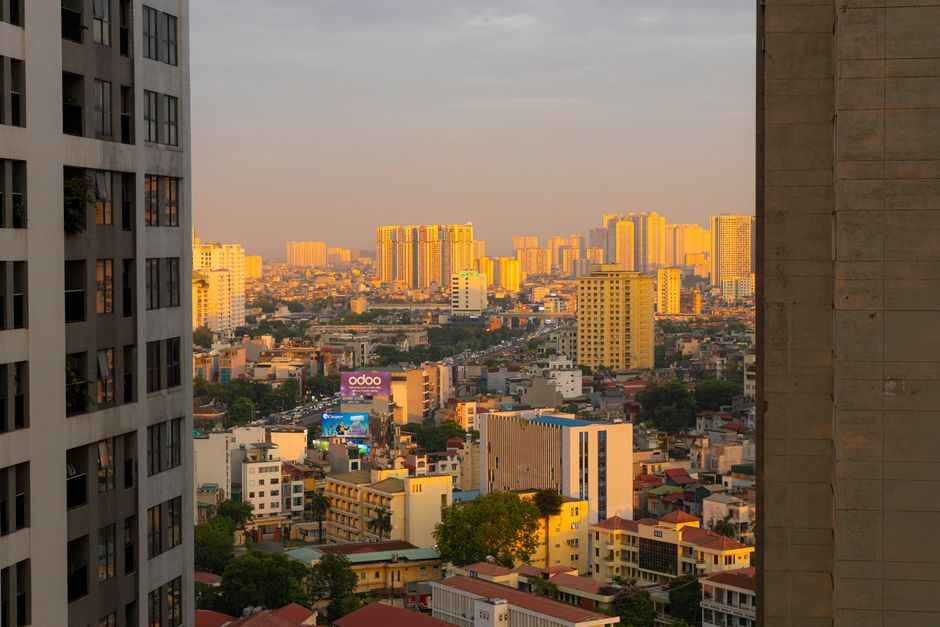
Gurgaon’s skyline has never looked more contested — cranes in Dwarka Expressway corridors, luxury towers rising along Golf Course Extension, and mid-segment projects quietly filling the gaps along Southern Peripheral Road. For anyone evaluating residential property investment Gurgaon today, the city is not a single market; it is a collection of micro-markets with genuinely different risk-reward profiles.
Understanding where you are on the capital appreciation vs. rental income spectrum matters more in 2025 than it did even three years ago, because interest rates, remote-work patterns, and new infrastructure have reshuffled the rankings considerably.
Micro-Markets That Are Delivering Capital Appreciation
Capital appreciation is strongest where supply is constrained and infrastructure is actively improving. Three zones stand out this year.
Dwarka Expressway corridor has arguably been Gurgaon’s most rewarding bet over the last 24 months. With the expressway now fully operational and the extension of the Delhi Metro’s Green Line progressing, properties in Sectors 84–95 have recorded price increases of 28–35% since early 2023, according to data tracked by ANAROCK Property Consultants, one of India’s most-cited residential research firms. Inventory launched here is being absorbed faster than it is replaced, which is textbook appreciation territory.
Golf Course Extension Road (New Gurugram, Sectors 57–65) remains the city’s luxury-appreciation story. Branded residences, ultra-premium plotted developments, and gated communities targeting C-suite buyers have pushed average ticket sizes past ₹4 crore. Because land parcels are scarce and DDJAY (Deen Dayal Jan Awas Yojana) plotted schemes have matured, resale premiums here are compounding well above inflation.
Southern Peripheral Road (SPR), particularly Sectors 68–75, is the sleeper pick. Commercial office parks by major IT occupiers are pulling in talent that, in turn, needs upscale housing within a 15-minute commute. Price per square foot has climbed roughly 18–22% year-on-year, yet SPR still trades at a discount to Golf Course Extension, leaving room for further appreciation as the precinct matures.
If capital growth is your priority, the common thread across all three zones is proximity to either metro connectivity or established employment hubs — ideally both.
Micro-Markets That Are Delivering Rental Income
Rental yield in Gurgaon has historically been modest (2.5–3.5%) compared to cities like Pune or Hyderabad, but specific pockets are now pushing that ceiling upward.
Cyber City and DLF Phase 1–5 continue to command the city’s most dependable rental demand. Multinational tenants, expatriate families, and senior corporate professionals rent here on long leases with low vacancy periods. A well-maintained 3BHK in DLF Phase 3 can yield ₹65,000–₹90,000 per month, translating to gross yields of 3.2–3.8%. Churn is low, which matters as much as the headline number.
Sohna Road (Sectors 47–50) has become a sweet spot for mid-segment rental investors. The concentration of co-working spaces and the presence of companies like Google and American Express in nearby sectors have created steady demand from young professionals who prefer renting over buying. Typical 2BHK rents have risen 14% year-on-year, and supply pipelines remain manageable enough that vacancy has not spiked.
Manesar and IMT Manesar, often overlooked by retail investors, is a manufacturing and logistics hub drawing workers from across Haryana. Rental demand here is volume-driven rather than premium-driven, but gross yields of 4–4.5% are among the highest in the Gurgaon metropolitan region. The trade-off is that capital appreciation is slower and tenant profiles are more transient.
For rental-income seekers, CREDAI’s market outlook reports provide useful benchmarks on occupancy trends and projected supply pipelines across Haryana’s key cities, including Gurgaon.
How to Decide Which Strategy Fits You
The honest answer is that most investors in 2025 are not choosing one or the other — they are stress-testing both scenarios before committing. A few practical filters:
– Holding period: If you can hold for seven-plus years, appreciation-focused zones like Dwarka Expressway make sense even if early yields are thin (often 1.8–2.2%). If you need income within 12–18 months of possession, Sohna Road or Cyber City adjacencies are safer bets.
– Ticket size: Golf Course Extension luxury plays require deep pockets and a patient exit strategy. Sohna Road and SPR offer entry points in the ₹80 lakh–₹1.5 crore range that are accessible to a wider investor base.
– RERA compliance: Always verify project registration on the Haryana RERA portal before signing anything. Delayed possession remains the single biggest destroyer of both yield and IRR in Gurgaon.
Frequently Asked Questions
Which area in Gurgaon is best for residential property investment in 2025?
There is no single best area — it depends on your goal. For capital appreciation, Dwarka Expressway and Golf Course Extension Road are leading picks. For rental income, DLF Phase 1–5 and Sohna Road offer more consistent returns with lower vacancy risk.
What rental yield can I realistically expect in Gurgaon?
Gross rental yields across most of Gurgaon sit between 2.5% and 3.8%. Manesar and IMT Manesar can push toward 4–4.5%, while luxury segments in Golf Course Extension typically yield 2–2.5% gross despite strong capital gains.
Is Dwarka Expressway a good investment in 2025?
For capital appreciation, yes. Infrastructure completion and metro connectivity have significantly reduced the risk premium that once made buyers cautious. However, rental demand is still building, so investors focused purely on yield may need to wait 2–3 more years for the precinct to fully mature.
How do I verify a project before investing in Gurgaon?
Check the project’s RERA registration number on the Haryana RERA portal, confirm the developer’s past delivery track record, and independently verify OC (Occupancy Certificate) status for completed projects. Avoid off-plan investments where land title disputes are unresolved.
Are property prices in Gurgaon likely to correct in 2025?
A broad correction appears unlikely given the demand-supply dynamics. However, over-leveraged mid-segment launches in peripheral sectors with weak social infrastructure could see price stagnation if employment growth slows. Micro-market selection, rather than a city-wide call, is the more reliable analytical frame.
What is the minimum budget needed for residential property investment in Gurgaon?
Useful entry points begin around ₹50–60 lakh for studio and compact 1BHK units in Sohna Road or Manesar. Mid-segment 2BHK investments in established sectors like 47–57 typically require ₹80 lakh–₹1.2 crore. Premium and luxury segments start at ₹2.5 crore and above.